
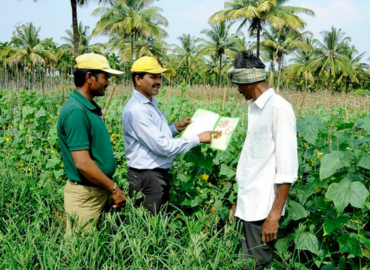

For decades, Indian farmers have lived with uncertainty. They nurture crops with sweat and dedication, but when harvest season arrives, they face exploitation in traditional mandis. Middlemen decide the prices, markets fluctuate wildly, and farmers often sell their produce for much less than it’s worth.
This unfair system not only reduces farmer income but also discourages younger generations from choosing agriculture as a profession. At Bharat Farm Connect, we recognized this gap and decided to change the story by ensuring fair prices for farmers through technology, transparency, and direct connections.
In this blog, let’s explore why fair pricing is such a critical issue, how farmers are affected today, and the ways Bharat Farm Connect is working to transform their future.
Why Fair Pricing Matters for Farmers
For most farmers in India, income is unpredictable. Unlike salaried jobs, agriculture offers no fixed monthly earnings. Instead, it depends on harvests, rainfall, and volatile market prices.
When farmers don’t receive fair prices:
1.They cannot recover their input costs (seeds, fertilizer, irrigation).
2.They struggle with loan repayments and often fall into debt.
3. Families face financial insecurity, affecting education, healthcare, and daily living.
4. Food wastage increases as unsold crops rot in storage or fields.
Thus, fair pricing is not just an economic issue—it’s a matter of dignity and survival for millions of farmers.
The Problem with Traditional Agricultural Markets
Before we understand Bharat Farm Connect’s solution, let’s examine what’s broken in the current system:
1. Middlemen Exploitation
(I) Farmers sell their crops to local traders or agents who dictate prices.
(II) By the time the product reaches the consumer, prices rise 3–4x, but farmers see no benefit.
2. Price Fluctuations
(I) Prices in mandis are highly unstable and often manipulated.
(II) Farmers sometimes have no choice but to sell at throwaway prices to avoid crop spoilage.
3. Lack of Transparency
(I)Farmers rarely know the real demand and price of their produce in wider markets.
(II) Information gaps leave them vulnerable to exploitation.
4. Fragmented Supply Chains
Poor storage and transport infrastructure lead to wastage, reducing overall earnings.
Example: A farmer in Madhya Pradesh sells wheat at ₹18 per kg in the mandi, while the same wheat reaches city supermarkets at ₹40 per kg. The farmer gets less than 50% of the consumer price.
How Bharat Farm Connect Ensures Fair Prices
At Bharat Farm Connect, our mission is clear: empower farmers by connecting them directly with buyers and removing unfair practices. Here’s how we are making it possible:
1. Direct Market Linkage
We eliminate unnecessary middlemen by connecting farmers directly with businesses, retailers, and consumers.
(I) Farmers receive higher profits for the same crops.
(2) Buyers get fresh, traceable produce at competitive rates.
2. Transparent Pricing System
Our platform ensures that farmers are aware of:
(I) Real-time market rates across regions.
(II) Fair demand-based pricing, not manipulated by middlemen.
(III) Contracts with buyers that lock in prices and reduce uncertainty.
3. Technology for Trust
Every product sold through Bharat Farm Connect is traceable back to its source.
(I) Farmers gain credibility because buyers know where their produce comes from.
(II) Transparency builds trust, which in turn helps farmers negotiate better prices.
4. On-Demand Supply Chain
We help farmers sell their entire harvest instead of struggling with partial sales. Businesses get a reliable supply chain, while farmers enjoy consistent income without distress sales.
5. Reducing Food Wastage
By connecting crops quickly to the right buyers, we reduce wastage. Less wastage = more earnings for farmers.
Impact of Fair Pricing on Farmers’ Lives
Ensuring fair prices does more than increase income. It creates a chain reaction of positive impact:
Higher Income Stability: Farmers can plan ahead instead of living in uncertainty.
Debt Reduction: Fair earnings help repay loans without falling into debt traps.
Investment in Farming: Farmers adopt modern tools, fertilizers, and irrigation when they know their produce will fetch good returns.
Better Quality of Life: Families benefit through improved education, healthcare, and nutrition.
Sustainable Agriculture: Farmers reinvest in eco-friendly practices because they can afford long-term planning.
Case Study: A Farmer’s Story
Take the example of a paddy farmer in Chhattisgarh. Traditionally, he sold rice through local mandis at unpredictable prices. Some seasons, his produce fetched ₹12 per kg; other times, as low as ₹8.
After joining Bharat Farm Connect, his produce was linked directly to buyers who needed bulk rice supply. With transparent pricing and no middlemen, he now earns ₹16–₹18 per kg consistently. His income rose by 30–40%, and he no longer worries about distress sales.
Why Businesses and Consumers Benefit Too
Fair pricing is not just about farmers—it also creates value for buyers and consumers.
Businesses: Get direct access to fresh produce, traceable origins, and long-term supplier relationships.
Consumers: Enjoy fresh, safe, and transparent food, knowing their purchase supports farmers.
This creates a win-win ecosystem where every participant benefits.
Conclusion
Fair pricing is the foundation of a sustainable and prosperous agricultural sector. For too long, farmers in India have suffered under the burden of middlemen, unstable markets, and lack of transparency.
At Bharat Farm Connect, we are changing this narrative. By enabling direct market linkage, transparent pricing, and reliable demand, we ensure that farmers earn what they truly deserve.
Every fair price is not just a number—it’s a step toward dignity, stability, and a better future for India’s farmers.